Ron Garner May 2026 All rights reserved
I hesitate to publish this as I have only done this job three times and am certainly not expert. However, if you are sufficiently unfortunate to need to replace the worm on a Bishop Gear steering shaft it is unlikely that you are going to find anyone with sufficient experience to guide you. So, for what it is worth, this is how I’ve accomplished the task.
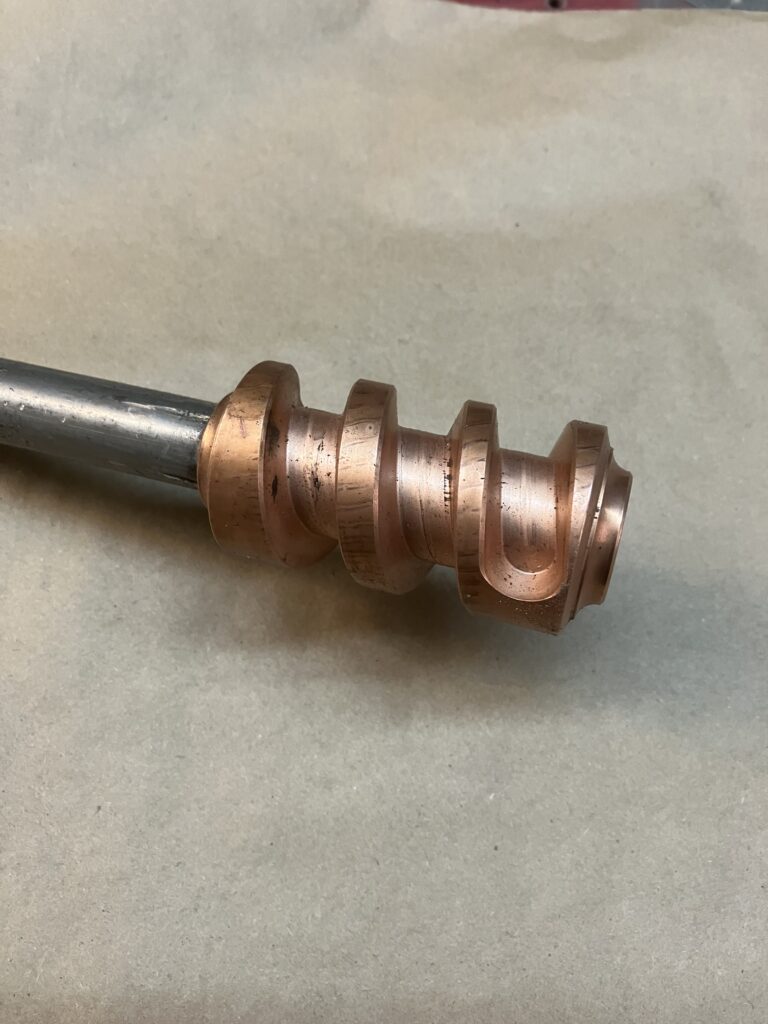
First note that although we typically call it a worm it is actually a cam. A worm would have uniform pitch and the width of the thread would be constant. The “thread” on the Bishop shaft varies such that it is tightest in the center where the peg rides when driving straight ahead. As the shaft turns and the peg is moved along its path the clearance increases. And there’s the rub, literally. We adjust the peg, which is tapered, into the thread by turning the screw on the steering box cover. The adjustment screw pushes the peg deeper into the thread reducing clearance for slop free steering when driving straight. Eventually wear makes further adjustment impossible.
Replacement “worms” are available although not cheap. I’ve bought mine through Melvyn
Rutter although there are probably other sources.
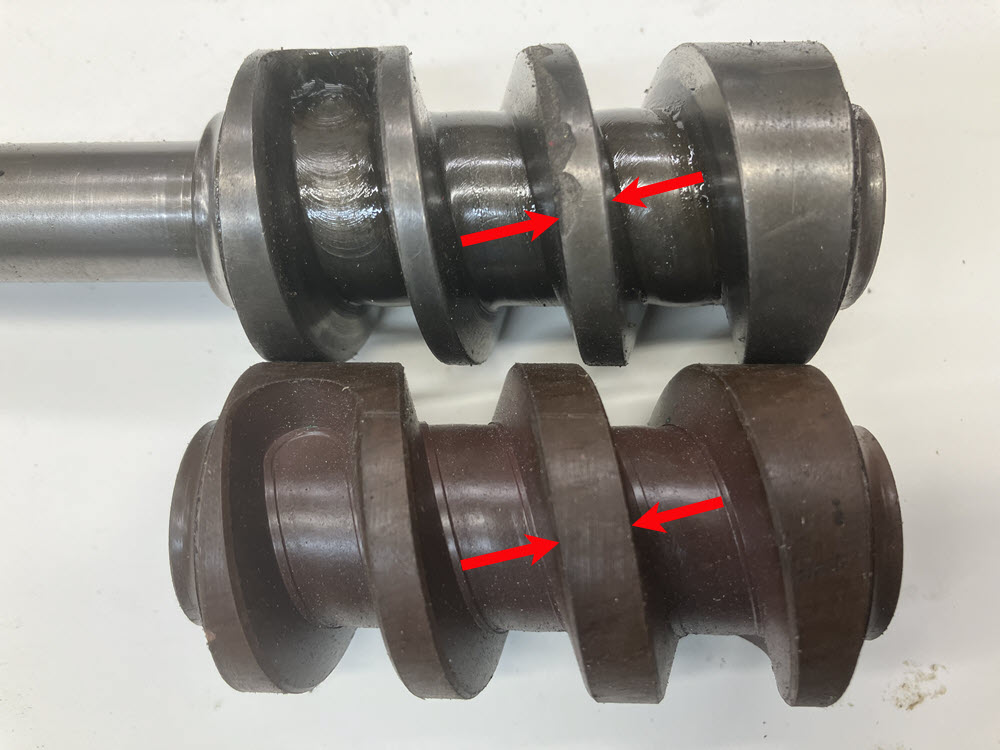
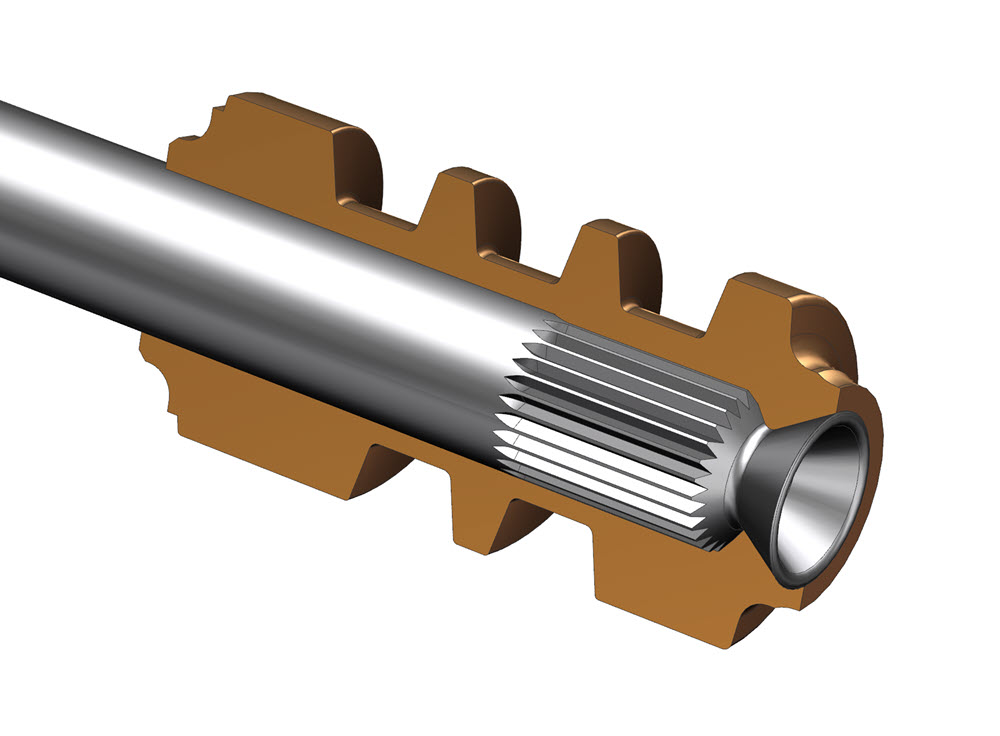
My solution is to cut off the worm using cut-off wheels on a disk grinder. The worm is steel. I make lengthwise cuts along the worm. The cuts have to stop short of the end so the flare on the shaft is not compromised. The other challenge of course is to cut through the worm without cutting into the shaft. Hmmm, good luck.
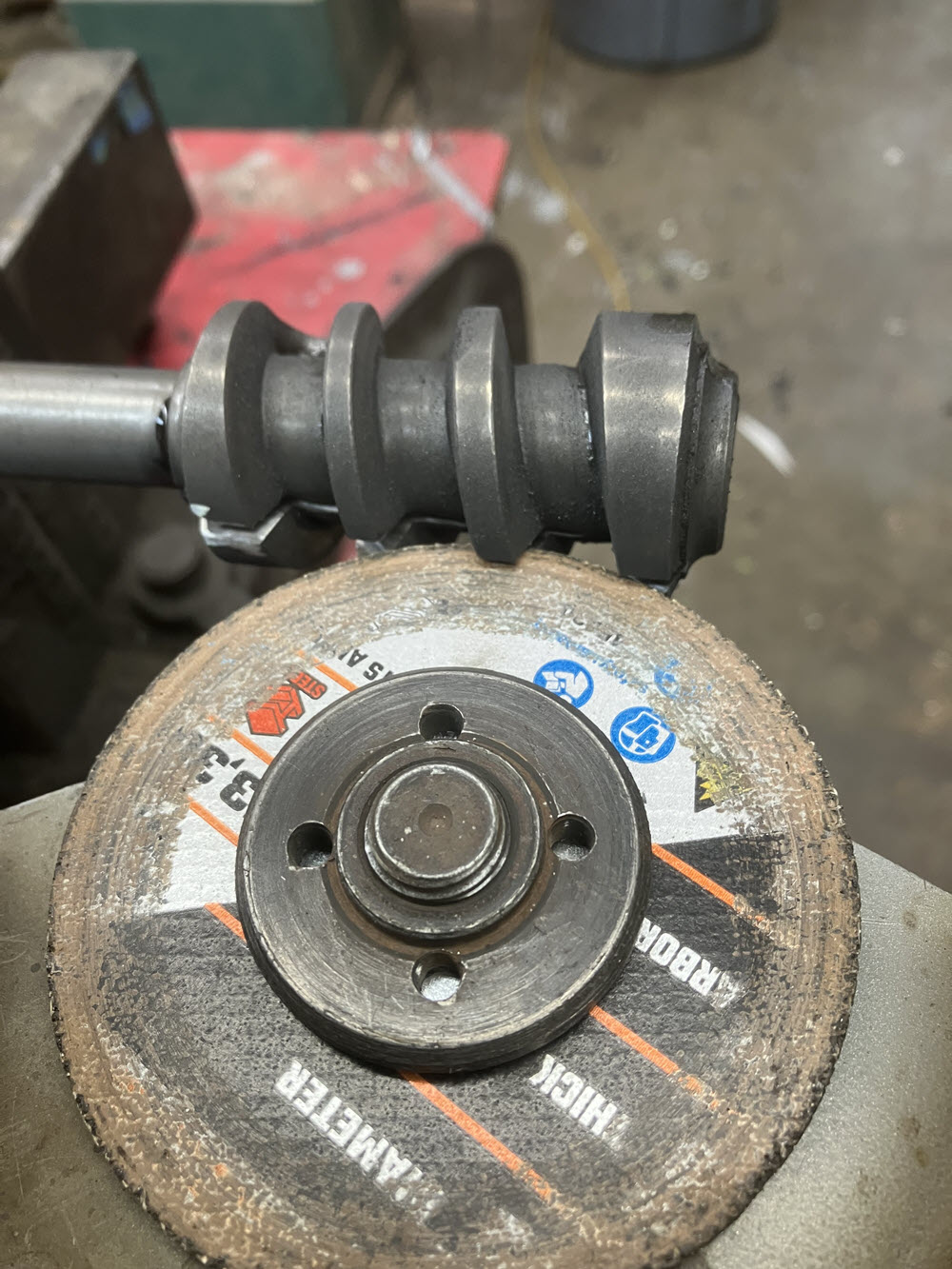
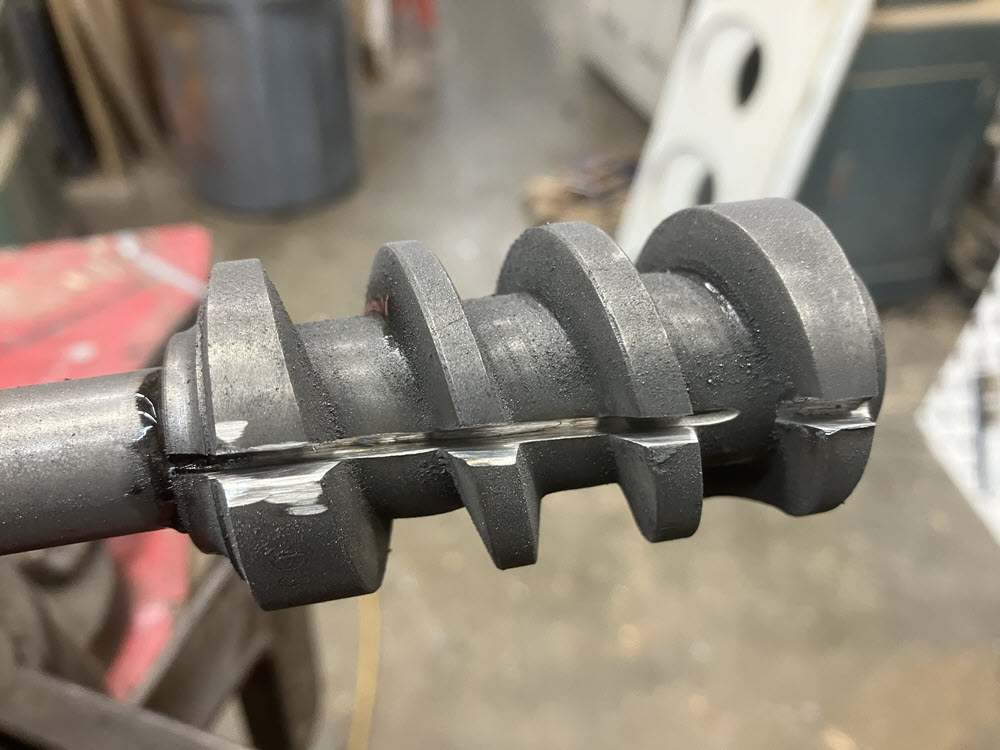
After making the legthwise cuts (preferably three) I pry the worm apart by hammering a chisel into one. If the cuts are sufficiently deep and as close to the spline/flared end as possible the worm will separate.
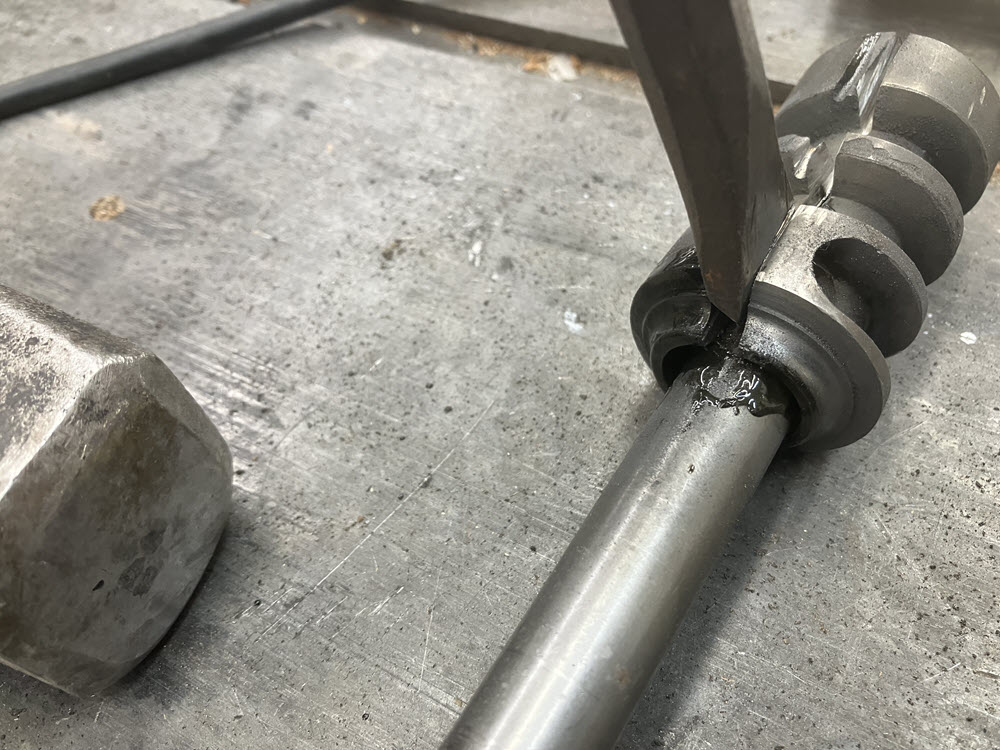
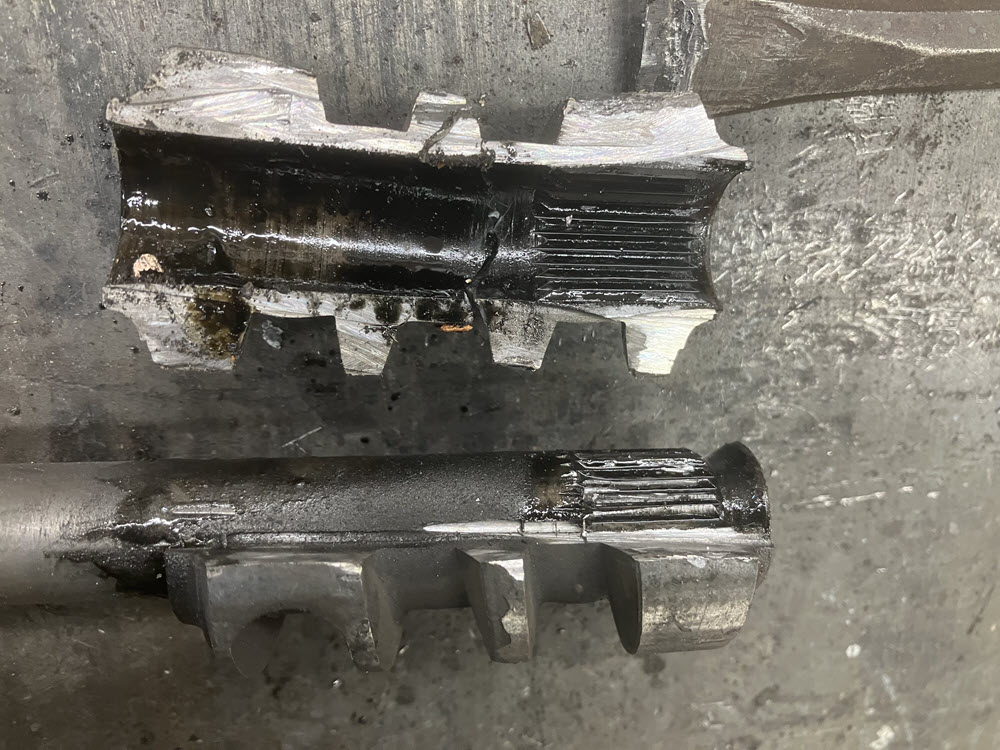
The next step is to press the flare straight so the new worm can slide onto the shaft. The shaft is chucked into a lathe. The tool post is fitted with a standard tool holder reversed so that the flat side bears against the flare. With the lathe turning at speed the flare is heated with an oxy/acetylene torch while the tool post is used to push it straight.
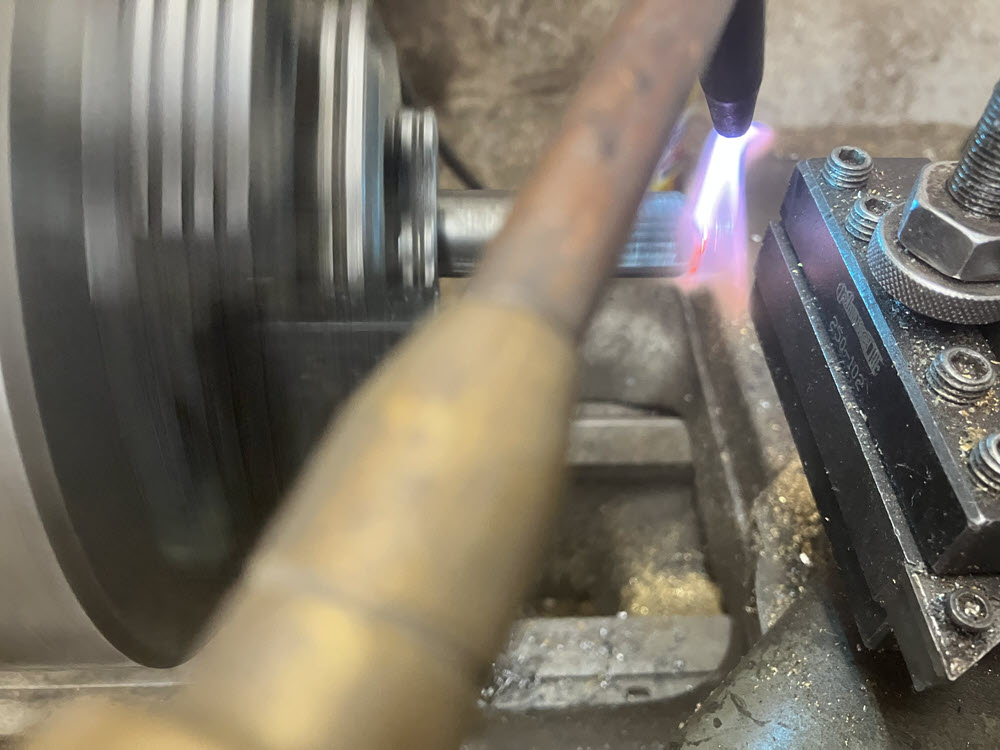
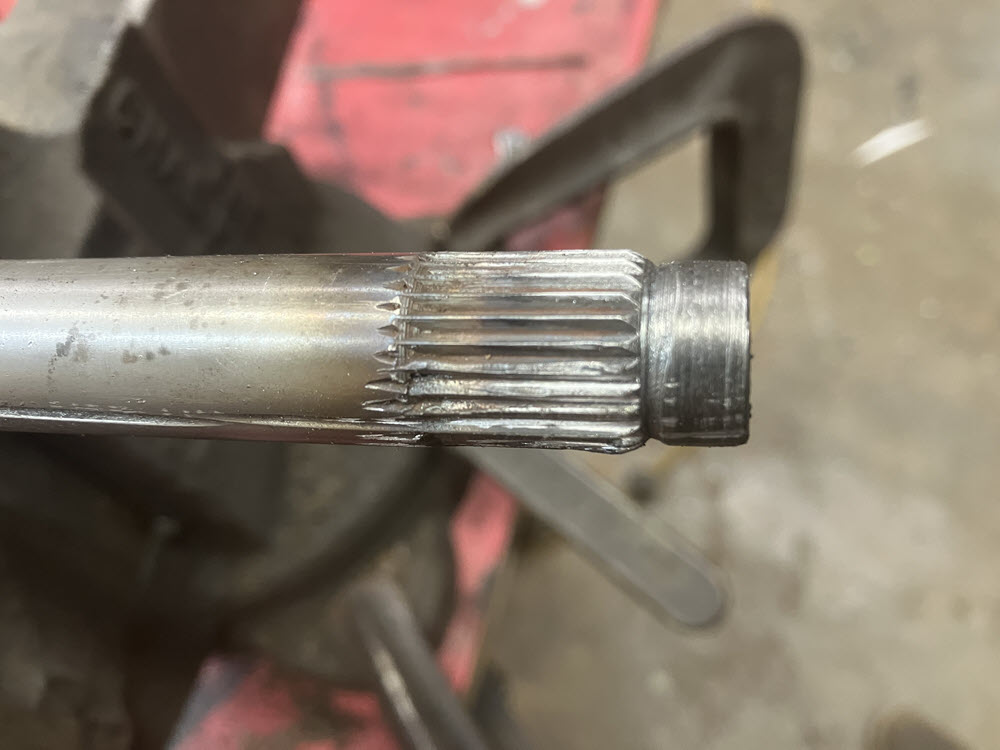
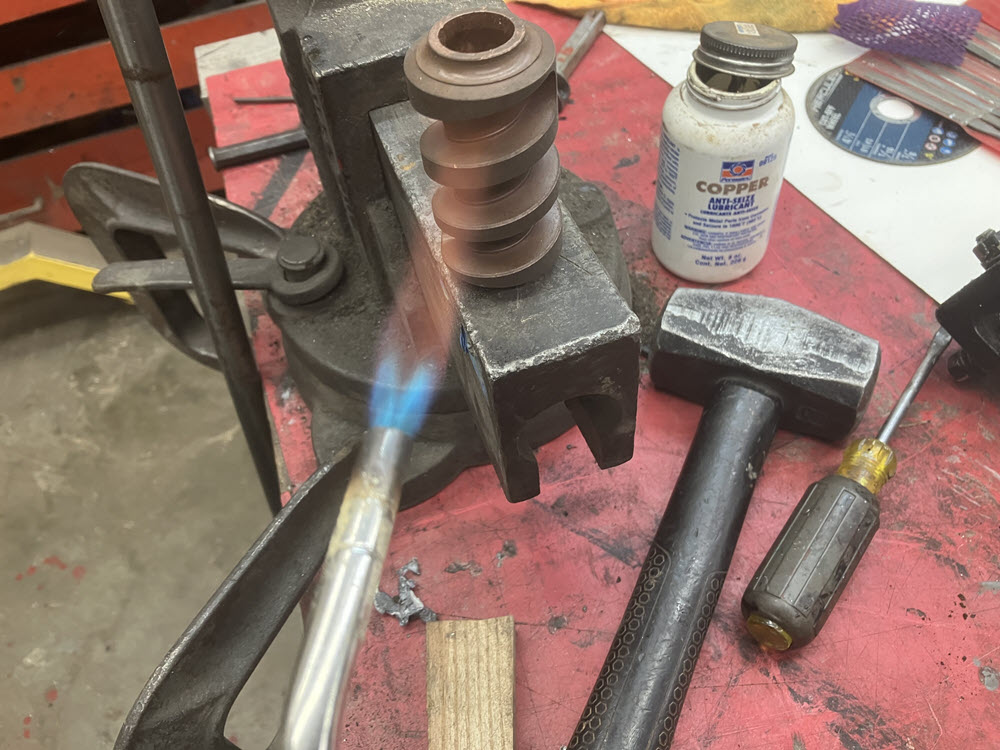
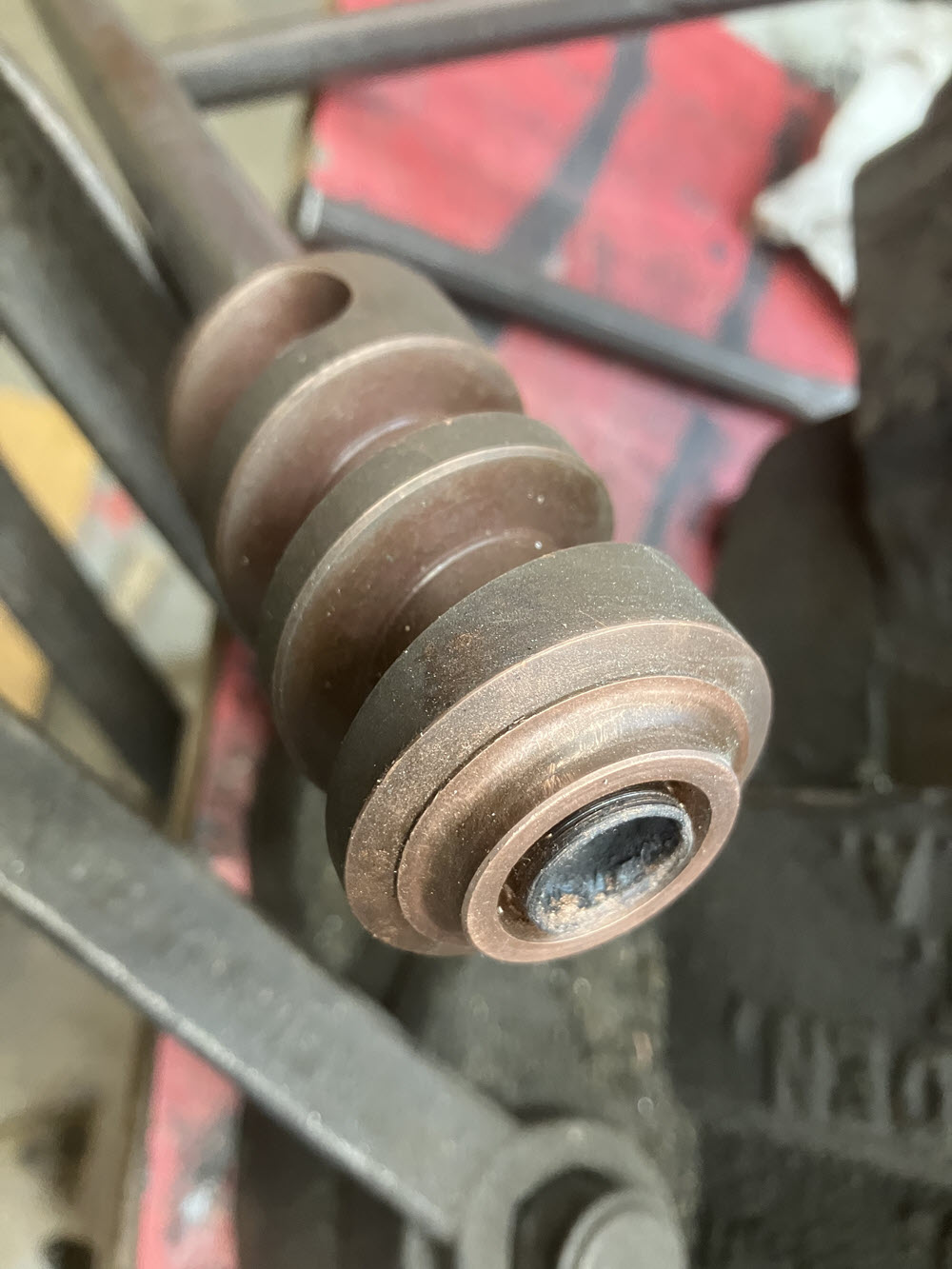
The worm is heated with a propane torch to expand it slightly, placed on the shaft and knocked into position using a hammer against a block of hard wood. Don’t hammer the worm directly as the end is a bearing race.
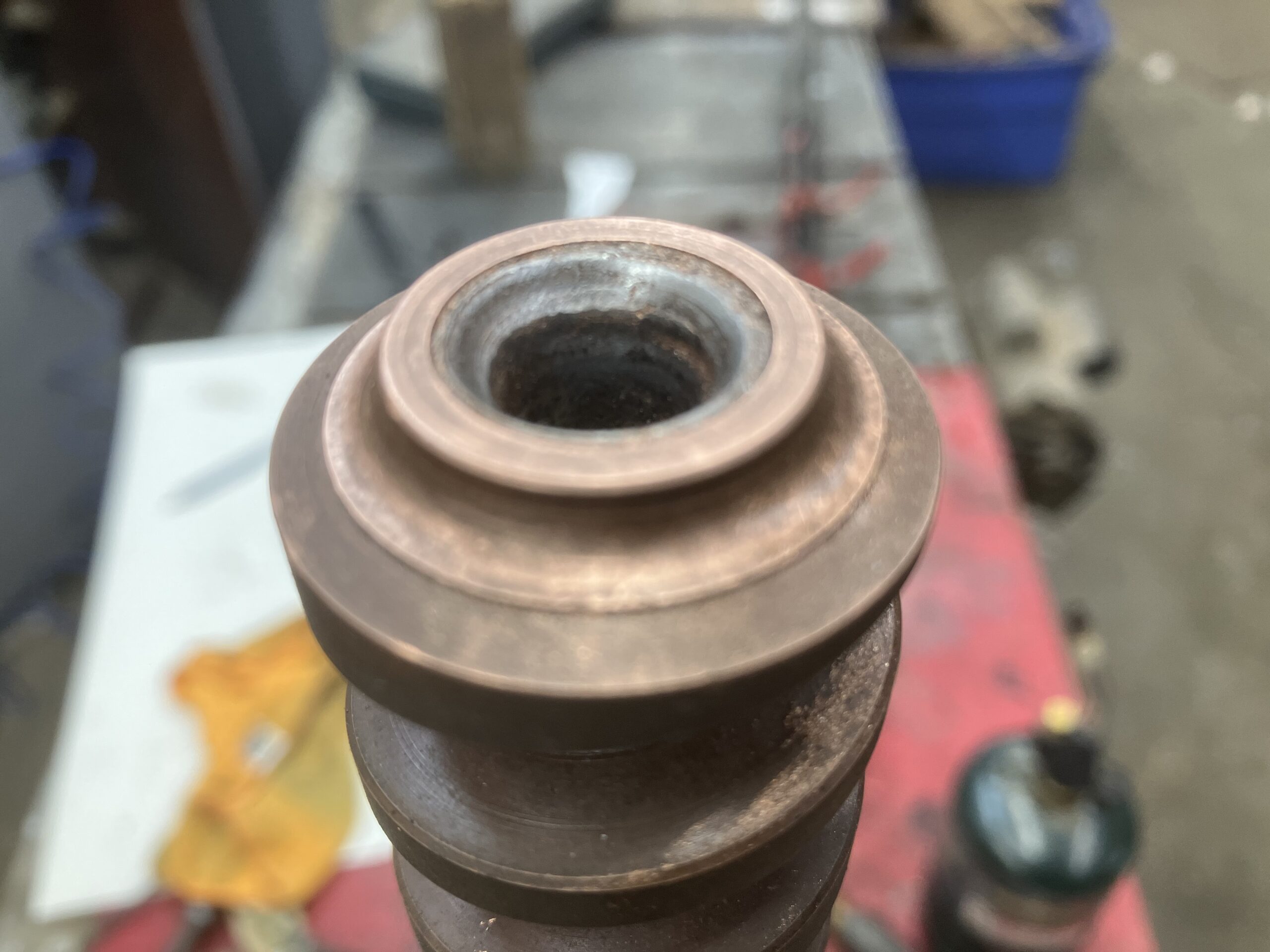
After the worm is located correctly reform the flare on the shaft end by hammering a tapered rod into it.
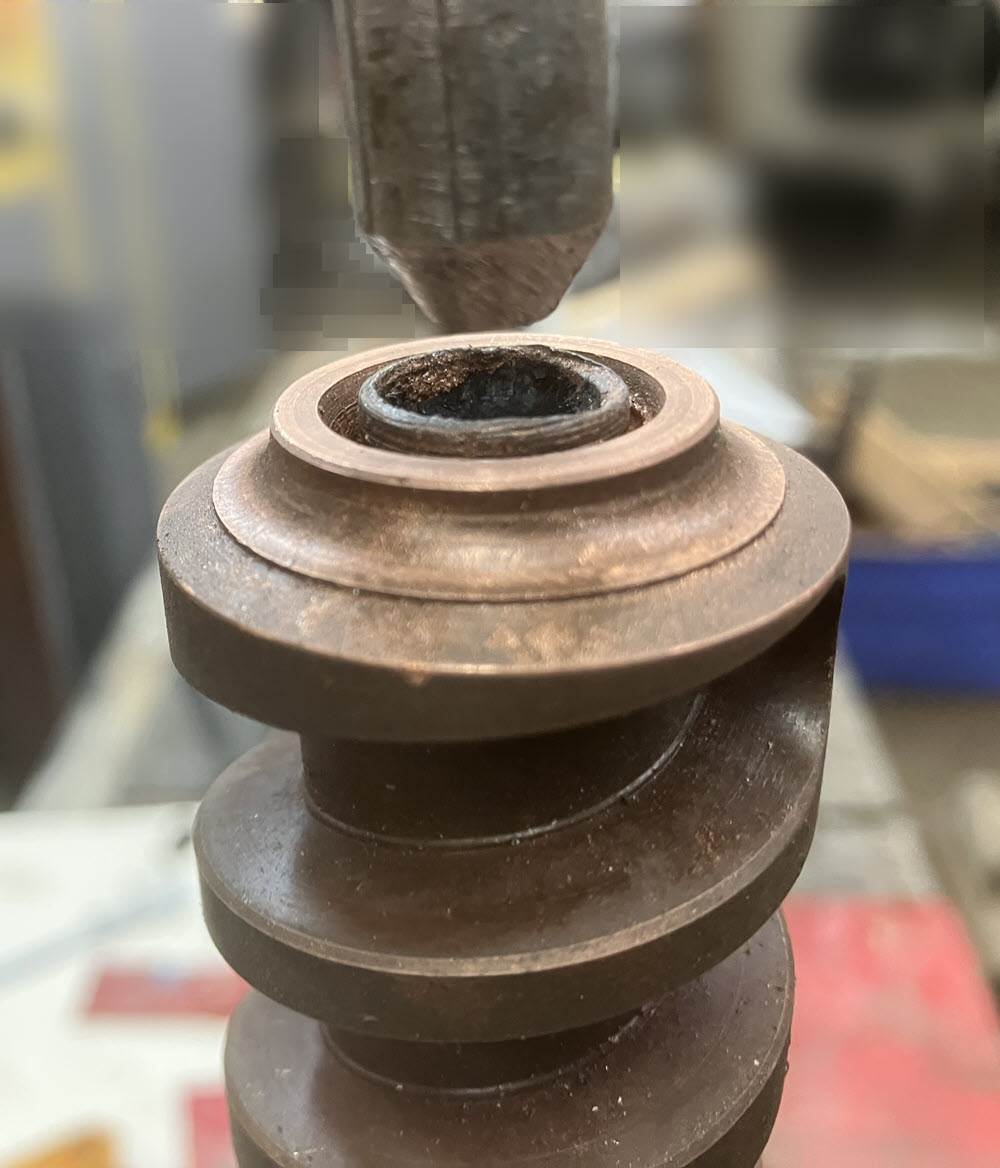
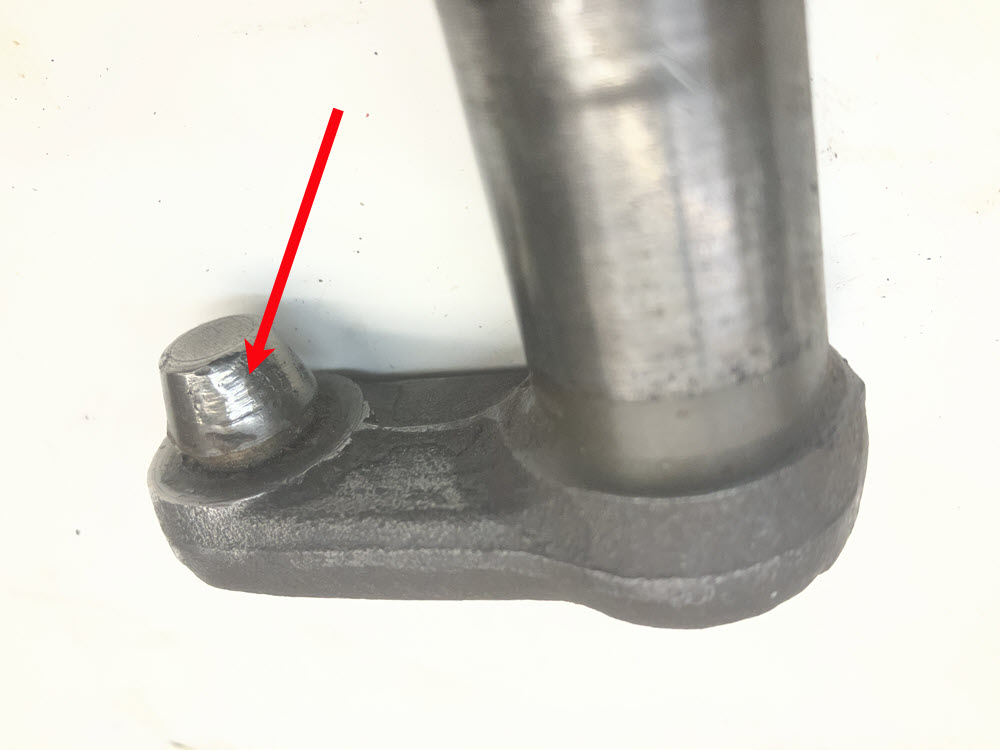
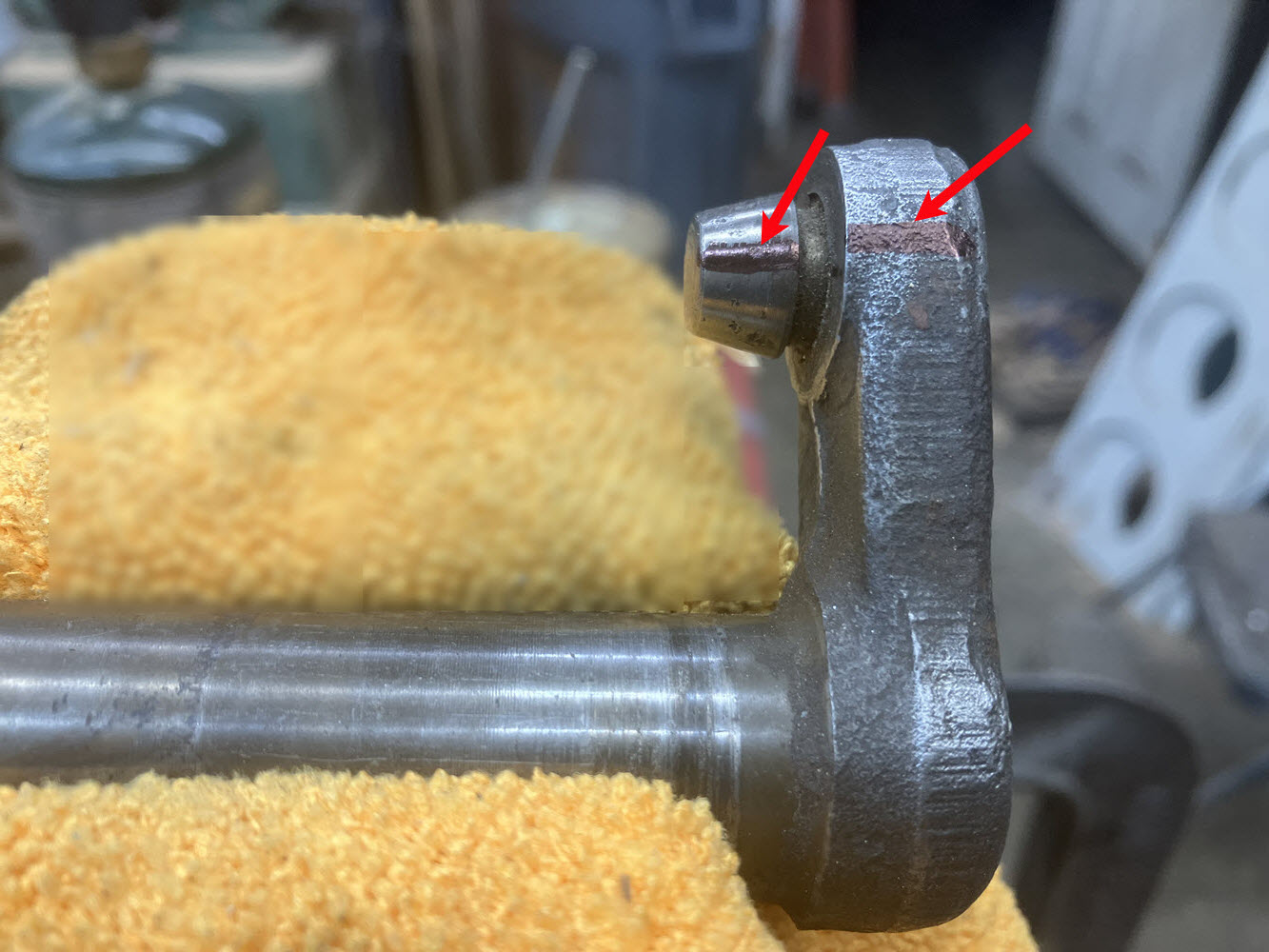
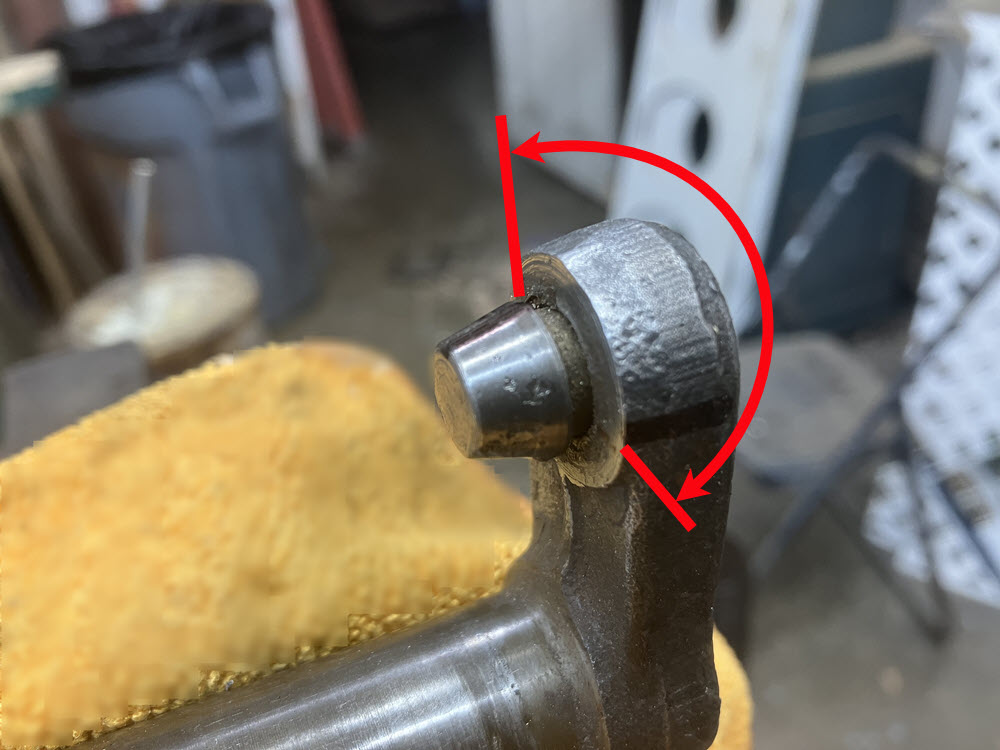
The last step is to rotate the peg 90 degrees. Use a magic marker to indicate the current position of the peg on the sector arm then knock the peg out using a punch, rotate, and reinstall it.
Now you can reassemble the steering column. whew!